 Doug Mouton
 Tim Negris
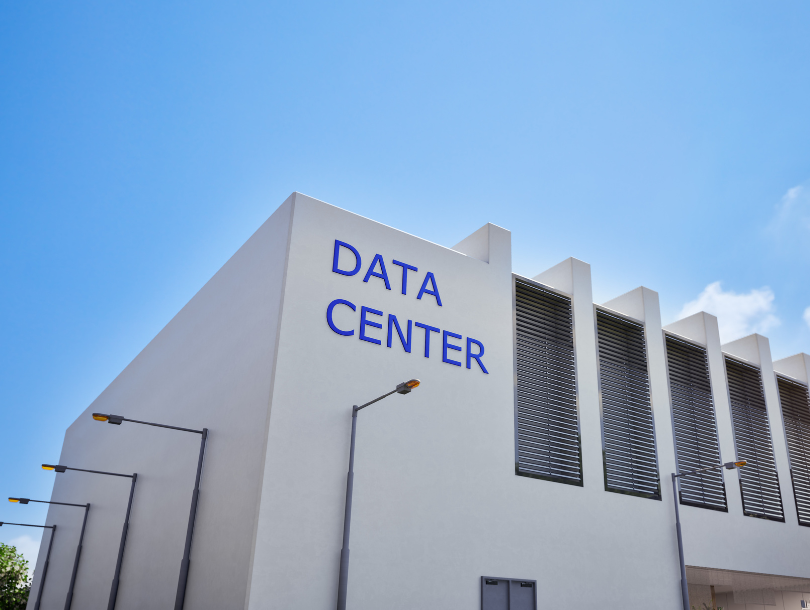
As AI infrastructure demand accelerates, data center teams are under growing pressure to deliver projects faster while managing increasing technical complexity and uncertainty. MOCA Systems, Inc. (MSI) spoke with Doug Mouton, former Microsoft and Meta construction executive and founder of Mouton Services, about Lean planning, Big Room collaboration, and the operational challenges shaping modern data center delivery.
Why are data center projects under so much pressure right now?
We're seeing roughly 30% annual growth in data center demand, driven by both traditional cloud services and rapidly expanding AI workloads. Before companies can generate revenue from AI, they first have to build the physical infrastructure to support it, making effective data center construction planning critical to delivery success.
The industry is trying to deliver at a scale it has never operated at before, creating shortages in labor, skilled trades, supply chain capacity, and experienced delivery professionals. When projects slip, owners are delaying revenue and eroding profitability.
What makes modern data center projects more complex?
One of the biggest changes is the transition from air-cooled systems to liquid-cooled systems for AI workloads. The GPUs powering AI generate so much heat that air alone can no longer cool them efficiently, which introduces far more complex systems to engineer and commission.
The industry is still learning how to deliver and commission these new environments at scale. AI workloads also behave very differently than traditional compute, with massive spikes in power demand happening in milliseconds.
Adding to the challenge, server technology is evolving faster than projects can be built. Teams may begin designing a data center today without fully knowing what hardware will ultimately occupy the building years from now. As a result, project teams are planning for uncertainty while actively delivering projects.
Why are Lean planning principles becoming more important in this environment?
Uncertainty has become unavoidable.
Many critical technical decisions can't realistically be finalized years in advance because technology is evolving too quickly. That means planning organizations need to become more agile.
Collaborative planning allows teams to make decisions at the last responsible moment while still maintaining alignment across the project. That's where Lean concepts become incredibly valuable. They give teams the flexibility to adapt without losing control of execution.
What makes Big Room Planning effective on complex projects?
Construction meetings are often passive. People show up because they're told to attend, but they're not actively participating. This mindset doesn't work on high-complexity projects.
Big Room Planning works when it creates shared situational awareness. Everyone understands what's happening, what risks are emerging, what critical activities are coming up, and how their work impacts everyone else.
You also need the people closest to the work participating in those conversations. The first-line leaders and trade partners need to be engaged and empowered to speak honestly about constraints and risks. But none of that is possible unless leadership creates the right environment. Teams must feel comfortable enough to talk openly about problems before those problems become crises.
What role should owners play in Lean delivery?
Owners have to understand that they ultimately own the risk.
Less mature organizations sometimes believe they can transfer all delivery risk to contractors through contracts or procurement structures. That's not reality, especially on highly technical projects where owner-furnished equipment and evolving requirements sit directly on the critical path.
The most successful owners stay actively involved in delivery. They participate in risk management, collaborative planning, and problem-solving with their supply chain. The organizations that struggle are often the ones that believe signing the contract solved the problem.
How can technology support Lean delivery and collaborative risk management?
Technology is important, but process matters first.
Digital planning solutions are enabling tools. If teams don't align around planning processes, the software alone won't solve the problem.
Where these platforms become powerful is in creating visibility and actionable data that help teams improve planning accuracy and make future projects more predictable.
What's the biggest lesson for teams trying to improve delivery?
You have to think about flow.
Projects move faster when teams intentionally plan around how work moves through the building. Too often we create unnecessary trade congestion, sequencing conflicts, and dependencies that make projects harder than they need to be.
But beyond planning systems, the biggest thing is trust. When leaders create collaborative environments where people feel respected and heard, field teams will tell you where the problems are and how to solve them. That's when projects really start performing differently.