 Linda Bücking
 Dr. Jan Onne Backhaus
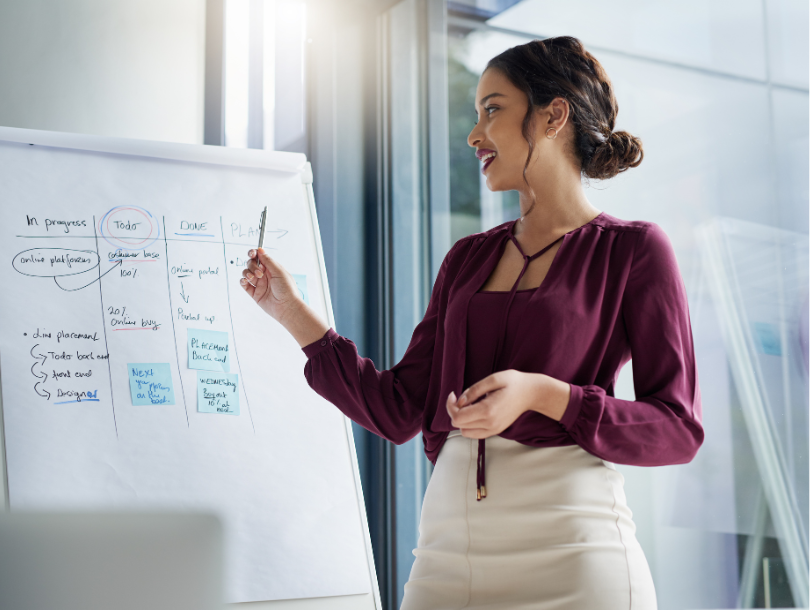
The most important results in a Lean Construction workshop are produced by the group, not by the person leading it. Facilitation is the craft that makes this possible.
The Facilitator's Neutral Position
Lean Construction Management (LCM) is built on collaboration. Whether it is a pull planning session, a lookahead meeting, or a retrospective, the work depends on people from different trades and companies thinking together and committing to a shared plan. The technical methods of LCM provide the structure for this work. But the quality of the conversation depends on how the session is led. This is where facilitation makes the difference. This article looks at the craft behind it: the roles a facilitator takes on, and the skills that bring facilitation to life.
At its core, the facilitator works from a position of neutrality — the facilitator's neutral role is essential for creating an environment where all participants feel heard and respected. Neutrality means the facilitator does not take sides, impose personal opinions, or influence the outcome of discussions.
The distinction between content and process captures this well: Participants are responsible for the content — the ideas, decisions, and subject matter — while the facilitator is responsible for the process — the structure, flow, and dynamics of interaction. In practice, this means the facilitator designs and manages how discussions unfold, sets ground rules, and ensures that time is used effectively, without dictating what participants should think or decide. By safeguarding the process, the facilitator enables participants to fully own the content, fostering accountability and creativity.
Take a Last Planner System® (LPS) workshop: the facilitator prepares the space, guides the group through the LPS steps, and keeps the process running — but the trades themselves decide which activities happen, how they sequence, and where the constraints lie. When the HVAC and electrical teams start debating duct clearance, the facilitator does not solve the issue; they move it into a breakout session.
In reality, this neutral position is often hard to hold, especially when the person facilitating also has a stake in the content. This dilemma is something project managers and construction managers run into all the time. It is hard to guide a discussion neutrally when you have your own view on what should happen next. Two things help: be transparent about the double role and signal clearly when you are switching between guiding the process and contributing as a participant — or hand the facilitation to someone else, which often lets you contribute to the content much more effectively.
Various Roles of the Facilitator
Facilitating a workshop session goes far beyond opening a meeting and keeping track of time. Skillful facilitation is much more — in fact, a skilled facilitator takes on many roles. Not every role fits every session, and often several are at play at once. To make this tangible, here are five examples of how these roles show up in real workshops.
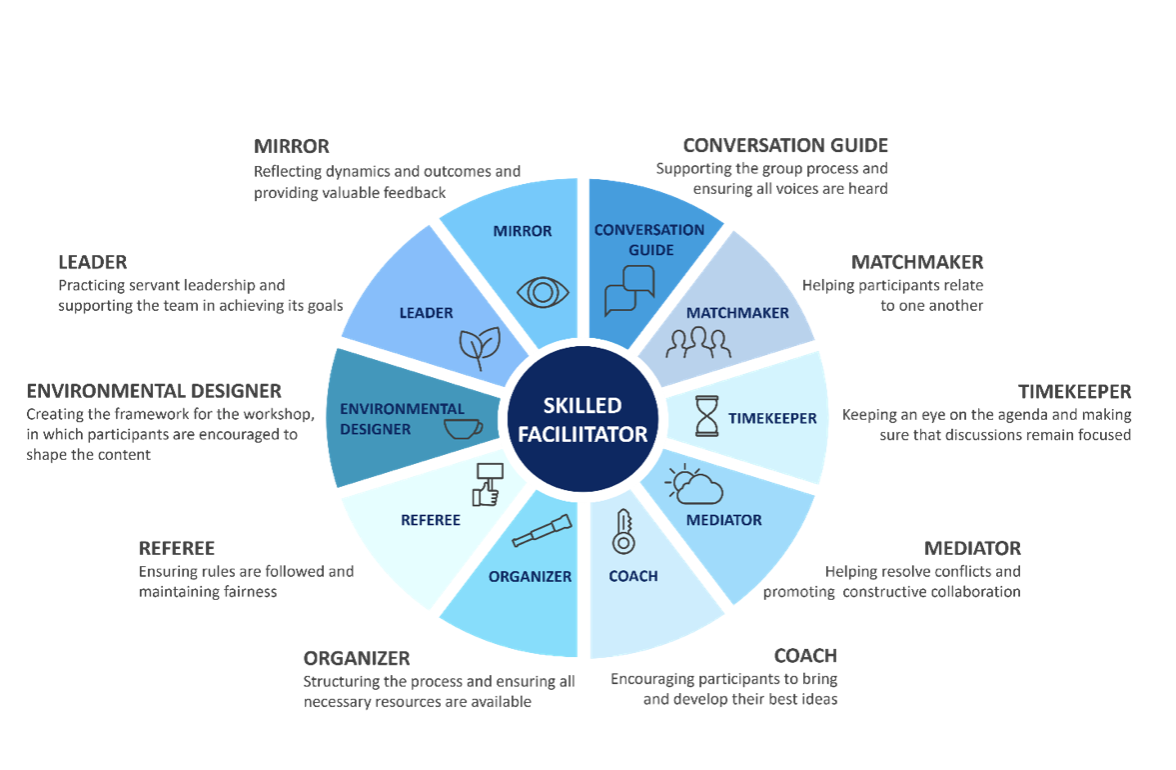
Conversation Guide
Effect: All voices come into the room without the facilitator contributing content.
Matchmaker
Effect: Fresh perspectives emerge and relationships build across the usual lines — simply by changing who sits next to whom.
Organizer
Effect: The session starts with contributions, not with warming up — and the structure carries itself so the group can focus on content.
Environmental Designer
Effect: The room changes its mode with the group, and the energy shifts along with it.
Mirror
Effect: The group reflects on its own behaviour and can learn from what it sees.
Time to Reflect: When facilitating a workshop or a project meeting, which of these roles comes most naturally to you? And which do you find hardest to take on?
Facilitation as a Skillset
Great facilitation is not left up to chance. A facilitator works with the group, leads the process, and is able to adjust to the dynamics of any given session.
A facilitative approach supports the group by leveraging what is already there and building on it. That is how you achieve better outcomes and create commitment without adding any content yourself. Facilitation is a core leadership skill which is helpful in most meetings, regardless of whether a formal facilitator role is established.
Facilitation is a skillset that can be learned and practiced, consisting of verbal, non-verbal, and para-verbal techniques. In addition, many facilitators use visualization methods to enhance transparency and joint understanding of the topics discussed. When applied purposefully, these techniques shape the quality of interaction, enhance shared understanding, and ultimately improve decision-making.
| Dimension | What it covers |
|---|---|
| Verbal Facilitation Techniques | Asking strong questions, summarizing, paraphrasing, redirecting |
| Non-verbal Facilitation Techniques | Posture, facial expressions, eye contact, gestures, voice modulation, movement and position in the room |
| Para-verbal Facilitation Techniques | Room setup, seating arrangement, lighting, use of colors and sound, visual materials |
Time to Reflect: Which of these dimensions do you use intentionally in your meetings? Which one have you paid the least attention to so far?
Good Facilitation Isn't Luck
Skilled facilitation often looks effortless. In reality, every effective workshop is built on deliberate preparation and clear choices: who facilitates, what the session aims to achieve, and how the conversation will be shaped. The facilitator role can be taken on deliberately, shared openly, or handed to someone else. Whether it is a workshop, a daily huddle, or a project review — if the session is meant to deliver, facilitation cannot be left to chance.