Bernardo Etges

Renewable energy projects, especially solar photovoltaic plants, have gained significant relevance worldwide due to the growing demand for sustainable energy solutions. These projects, however, come with particular challenges: short execution cycles, tight deadlines, and the need for precise coordination of design and documentation to avoid delays in procurement and construction. This context creates fertile ground for Lean Construction principles to enhance efficiency and collaboration.
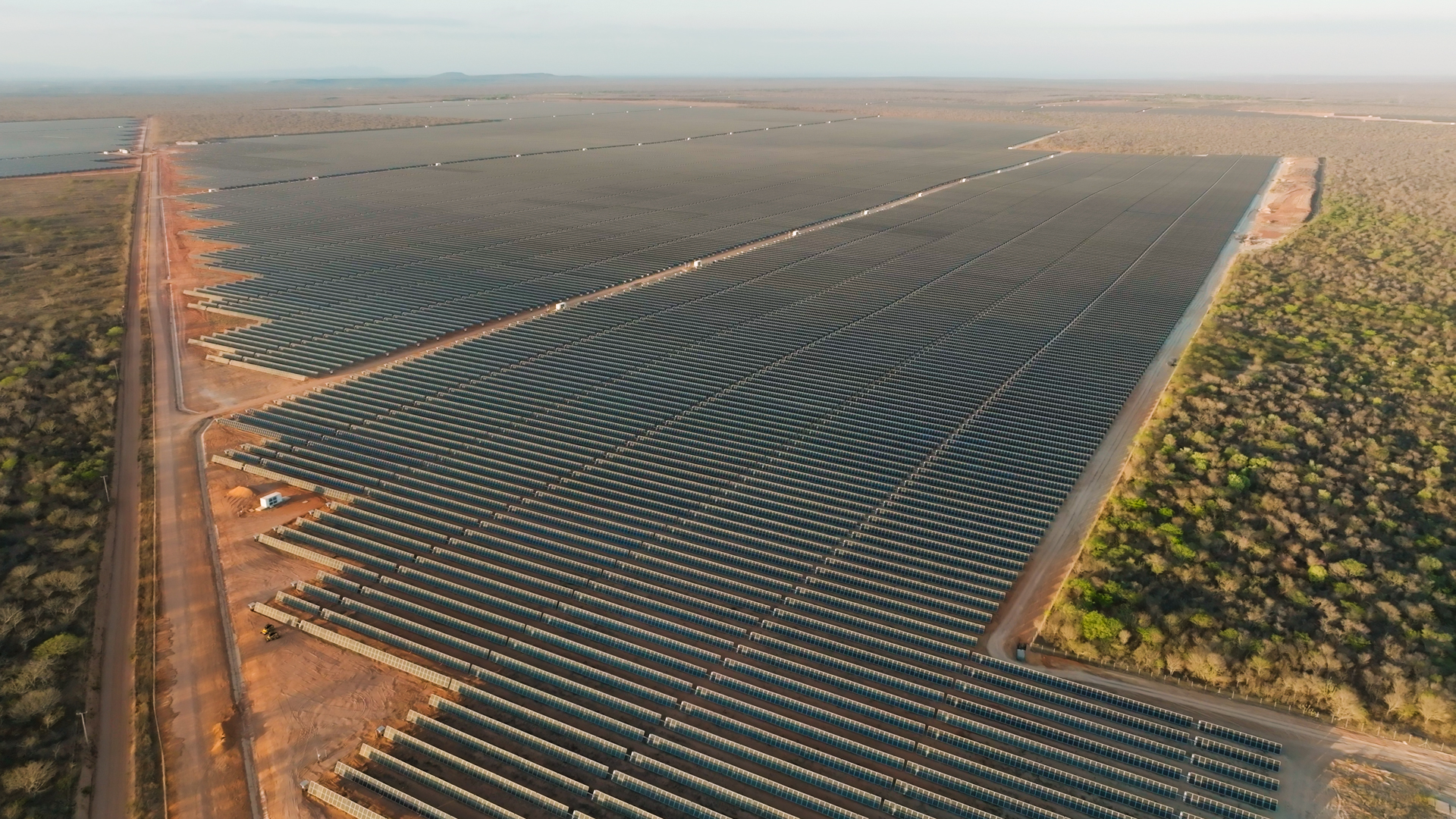
A recent study by Vieira et al. (2024) explored the application of the Last Planner System® (LPS) and pull planning in the design phase of two large solar power plant projects in Brazil. The research aimed to integrate Lean tools into design management, improving the flow of documentation — such as drawings, manuals, and bills of materials — needed to support construction and supply activities. By focusing on collaborative planning and clear definition of responsibilities, the study demonstrated that pull planning can serve as an effective documentation management tool in EPC projects.
Why Pull Planning in the Design Phase?
Traditionally, Lean practices in construction have focused on production rather than design. However, the design phase is a critical point of failure in many projects. Delays in drawings or specifications can paralyze construction teams and lead to rework, increased costs, and wasted time.
The study highlights that integrating Lean into design management can improve communication between engineering, supply, and construction teams — especially in projects with fast execution cycles. Pull planning provides a structured, collaborative approach to establish clear milestones, align stakeholders, and anticipate constraints that could disrupt the schedule.
Unlike traditional "push" planning, which dictates what should be done, pull planning focuses on what can be done, working backward from key milestones to define realistic workflows. This approach fosters collaboration, exposes dependencies, and makes bottlenecks visible before they affect project progress.
How It Was Implemented
The case study was conducted at Company X, a Brazilian firm specializing in EPC contracts for solar power plants. Two projects were analyzed:
- Project P: 295 MWp capacity, 443,190 modules, and a 12-month execution period.
- Project M: 445 MWp capacity, 676,566 modules, and a 14-month execution period.
The Lean implementation started with a diagnostic phase, where processes and cultural aspects were analyzed. After this stage, LPS routines were introduced gradually, including long-term planning using the Line of Balance (LOB), pull planning sessions, and Kaizen events to address constraints and improve workflows.
Pull planning was applied specifically to the engineering sector, which was responsible for reviewing, validating, and approving designs produced by an outsourced project office. The process followed five steps:
- Defining the flow of documentation release processes — mapping all stages from development to approval.
- Analyzing the documentation list — identifying all necessary documents linked to master scheduling milestones.
- Building the pull planning board — creating a visual representation of tasks over time and aligning responsibilities.
- Defining milestones and process flows per activity — working backward to set start and end dates for each task.
- Structuring a weekly schedule — monitoring short-term commitments using Percent Plan Complete (PPC) indicators.
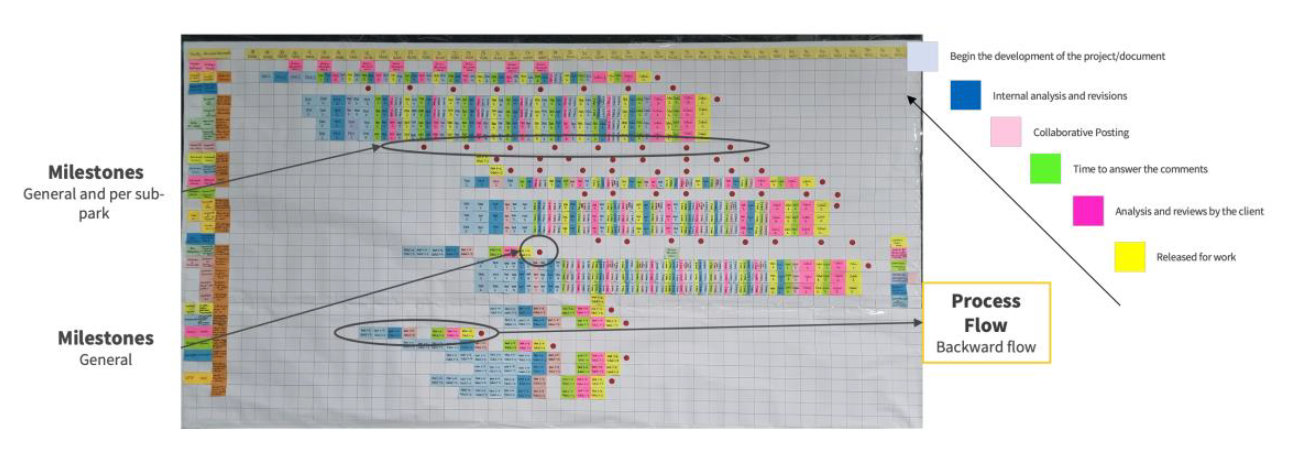
Pull planning board used to manage documentation flow across the engineering phase of the solar EPC projects.
Results and Key Findings
The application of pull planning improved visibility over the flow and timing of design deliverables, helping the engineering team better coordinate with construction and procurement. The weekly schedule provided a clear short-term view, enabling faster decision-making and early detection of constraints.
However, the study also revealed challenges. Teams struggled to consistently anticipate constraints during medium-term planning, and adherence to the weekly schedule was still limited. In Project M, compliance was insufficient to produce noticeable results, while Project P showed slightly higher adherence, with an average PPC of 56%.
Another important insight was the need for better integration between pull planning and the Line of Balance. Aligning engineering milestones with supply chain milestones could create a more robust planning flow, avoiding delays in material procurement that impact downstream activities.
Lessons for Practitioners
The study reinforces that pull planning is a powerful tool beyond the construction phase. By structuring the design process collaboratively, it aligns expectations across engineering, supply, and construction teams, fostering a shared understanding of responsibilities and timelines. For practitioners, the key recommendations are:
- Integrate pull planning with master scheduling tools like LOB. This ensures that design deliverables align with construction needs and procurement timelines.
- Run pull planning workshops early. Ideally one to two months before the actual work begins.
- Include all relevant stakeholders. The process works best when designers, engineers, planners, and Lean facilitators collaborate to define realistic workflows.
- Monitor PPC regularly. Tracking weekly commitments helps identify issues early and improve reliability over time.
Why It Matters
Photovoltaic projects demand speed, precision, and alignment across disciplines. A delay in documentation approval can ripple through the entire supply chain, leading to costly inefficiencies. By integrating Lean practices into the design phase, companies can anticipate constraints, reduce rework, and establish a stable flow of deliverables.
The case study shows that Lean is not limited to the construction site. When applied to design management, it fosters collaboration, increases transparency, and creates the conditions for better project outcomes.
Key Takeaways
- Design is as critical as construction. Applying Lean tools early prevents problems downstream.
- Pull planning enhances collaboration. Working backward from milestones engages all stakeholders in defining realistic workflows.
- Integrating design and supply planning is crucial. Aligning documentation milestones with procurement reduces delays.
- Monitoring PPC builds reliability. Weekly reviews provide valuable feedback to improve planning accuracy.
- Lean in design creates value. It enables faster, more predictable delivery and better alignment with project goals.