 Laura Avery
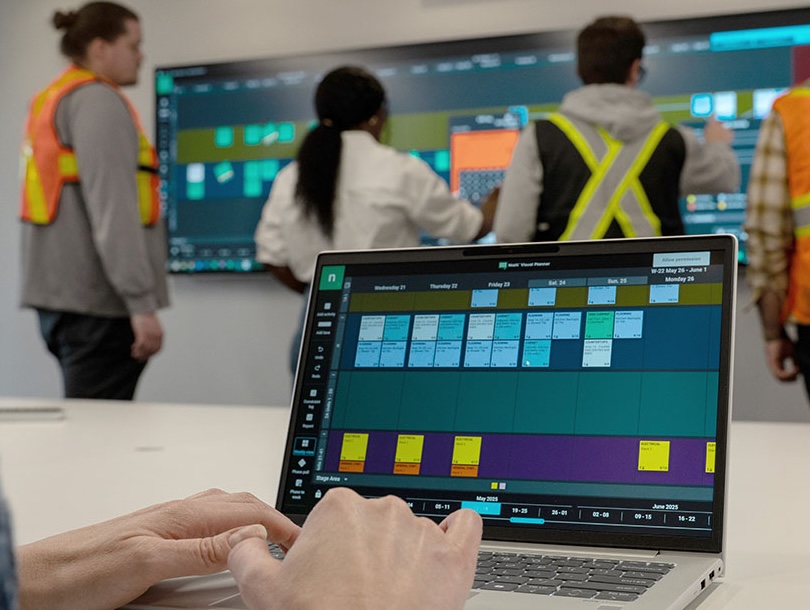
One of the biggest challenges construction teams face is communication silos. The average project has dozens (if not hundreds) of team members, all coming from separate organizations and with different backgrounds, expertise and financial motivations. They may have never worked together before, and they will likely disband once the project is complete.
So, how do you rally everyone together to ensure a project gets completed on time and on budget?
One of the best ways to do this is through colocation — having your multidisciplinary teams all converging on a regular basis in a communal space that's meant for collaboration. This concept isn't new — it actually originates from Lean manufacturing. The Japanese call this concept Obeya, which roughly translates to Big Room.
But some of the meaning gets lost in translation. A proper Big Room calls for so much more than having a meeting together in a physically large space.
When building a Big Room these days, you should be thinking beyond just physical collaboration. How can you also ensure your space is optimized for today's digital world?
Here are tips for 3 considerations when building your modern Big Room:
1Optimizing your room design
Creating a Big Room entails more than labeling your site trailer as a Big Room. How you lay out your space has a big impact on how immersive the experience will be for your team. Consider the following:
Is the room large enough to allow multiple teams to gather while having the space to break off into side discussions?
Can people easily come and go from the space? Or do they have to squeeze around equipment, chairs and tables, forcing them to cluster at the back of the room while one person does all the talking? Is this room situated close to where teams are working or are you making them trek half a mile across a parking lot?
Is this a space that people want to spend time in? Cheap folding chairs, instant coffee and dirty floors screams "we don't care about you, so why should you care about this project?". If you want people to willingly convene and collaborate across teams, you need to give them a comfortable environment to do so. It's a gesture of showing you care more than anything else.
2Optimizing for collaboration
Once you've created an inviting layout, the next factor to consider is how your Big Room is going to facilitate interaction and conversation. You want your Big Room to become the place everyone gathers in for information, collaboration, resources and conflict resolution. Consider including the following:
Teams need a way to brainstorm and work through big problems together. For a low-tech starting point, this could be a large whiteboard or dedicated wall space for sticky note collaboration. But if you're looking to bring your room online, you'll want to consider investing in interactive screens and software to facilitate collaboration.
Collaboration takes many shapes and sizes. Setting up your space with furniture that's easy to move means you can support various group sizes and collaboration settings (morning huddles, breakout sessions, individual work).
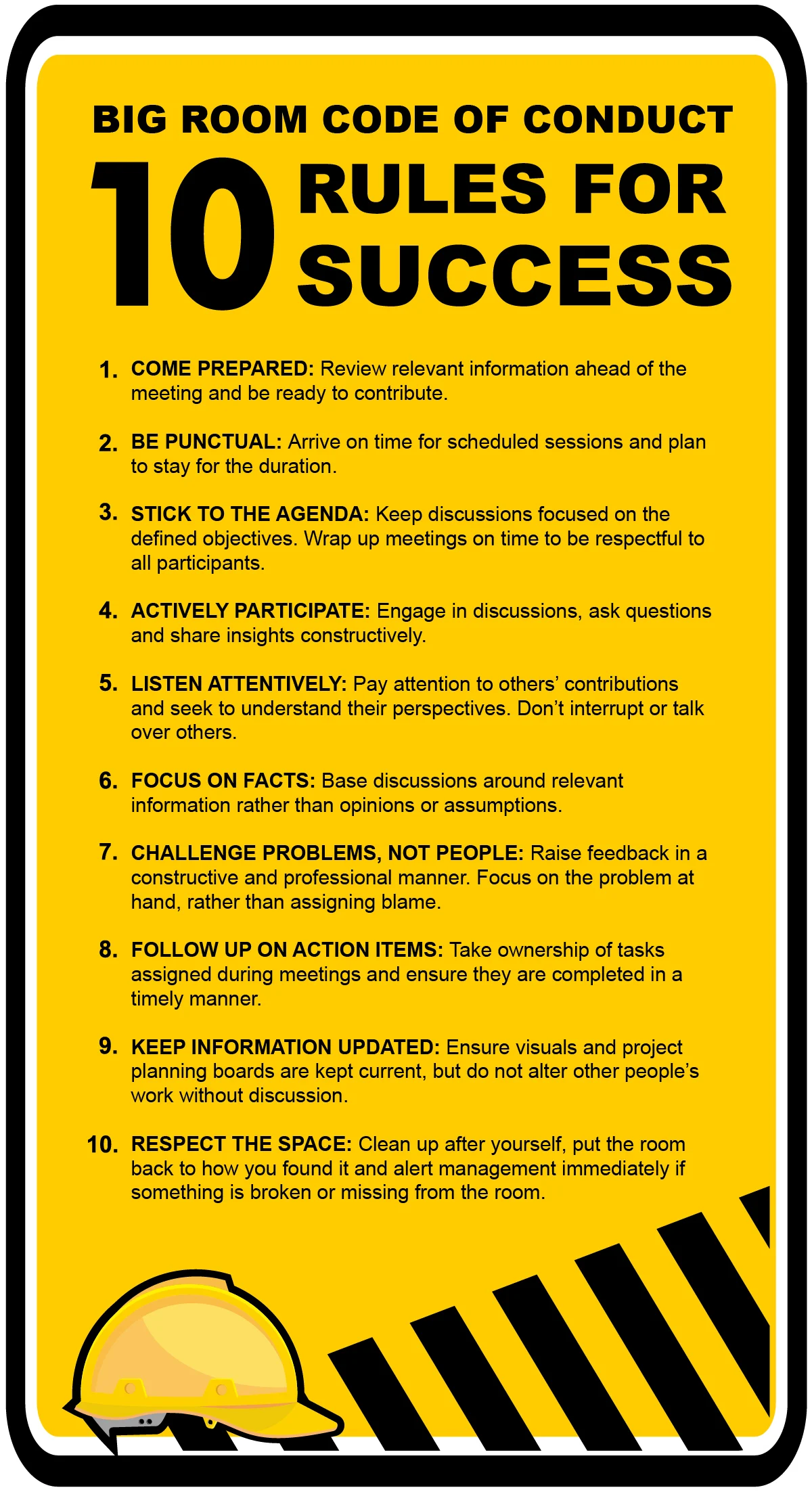
In a Big Room environment, ground rules are important for maintaining order and respect. Establish a code of conduct for the space and post it in a visible location for everyone to see.
3Optimizing for digital
While collaboration works best when teams can be together in the same room, the reality is this is not always possible. You may not be able to get everyone on site for every meeting. And what if you want to share digital files or record your meetings for future reference? Going digital is a modern necessity, so consider including the following as you bring your space online:
Teams need to be able to see BIMs, visual dashboards and schedules in detail. Large TV screens can suffice, but to drive deeper interaction with the content, consider investing in touchscreen displays. Just ensure your computer is powerful enough to run this!
Active participation is a requirement for Big Room success. So, what happens if remote participants can't see or hear what's happening in the room? If you want remote attendees to get any value out of your sessions, be sure to invest in solid cameras, microphones and speakers for your room. Time is valuable, so don't let participants waste it by having to fiddle around with conference room settings. Consider setting up your space as a Microsoft® Teams Room or Zoom Room so participants can launch meetings with the push of a button.
Meetings with more than six or seven participants may put a drain on your network. Do you have enough internet bandwidth to handle this? Can users log on to the network simply and securely? Consider what you'll need to do for external collaborators like trades or consultants who may not have corporate log-ins. Additionally, there should be ample power outlets throughout the room so teams can keep their phones, tablets and laptops charged throughout the day.
In conclusion, creating a digitally enhanced Big Room is a key ingredient for fostering effective collaboration and communication during construction projects. By optimizing the physical space for comfort and ease of movement, using modular furniture, incorporating ideation tools and establishing ground rules, teams can thrive in an inviting and productive environment. Additionally, integrating digital tools such as large-format displays, videoconferencing setups and robust wireless networks ensures in-room and remote participants can actively engage. This approach transforms the Big Room into a hub for both physical and digital collaboration, ultimately driving project success.